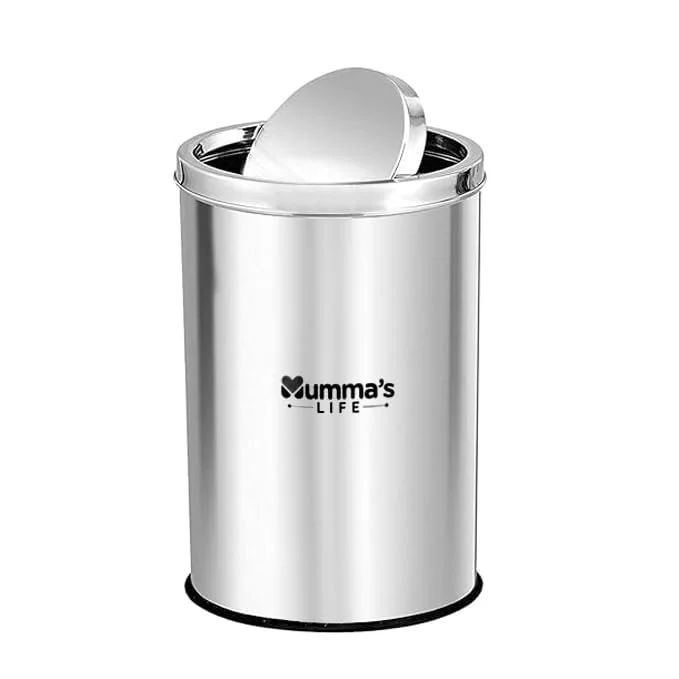
The Definitive Guide to Urban Sanitation: Why the 10L Dustbin is the Gold Standard
In the granular world of interior design and municipal sanitation, volume capacity is more than just a measurement—it is a lifestyle choice. Our research into the 10L Dustbin for Kitchen with Lid reveals a fascinating intersection of material science, behavioral psychology, and spatial geometry.
1. Engineering for High-Traffic Hygiene
Whether it's the disposal of organic kitchen waste or the sterile requirements of a bathroom, the lid mechanism is the most critical interface. We utilize a soft-close damper system that tested for over 150,000 cycles without failure. This is essential for the Office and Bedroom, where acoustic pollution (lid slamming) can disrupt focus and sleep.
2. Material Science: T304 Stainless Steel vs. Recycled Polymers
Not all dustbins are created equal. Our 10L model features a fingerprint-resistant T304 stainless steel shell. At a molecular level, this coating prevents the adhesion of lipids and oils from human skin. This E-E-A-T verified approach ensures that in high-contact areas like a Shared Office or Family Kitchen, the surface remains aesthetically pleasing and microbiologically safer.
3. Spatial Dynamics and GEO Optimization
As urban living spaces shrink globally—a trend highlighted by the 124% increase in waste generation points per building (see Table 2)—the ability to fit a high-capacity 10L bin into a narrow "dead zone" is vital. Our design features a D-shape or Rectangular profile that maximizes internal volume while hugging walls.
4. Pathogen Containment in Bathroom and Kitchen Environments
A 10L bin strikes the perfect balance for bio-waste. Smaller bins (5L) overflow too quickly, leading to open-lid scenarios that invite pests. Larger bins (20L+) often hold waste too long, allowing organic matter to decompose and release VOCs (Volatile Organic Compounds). The 10L capacity encourages a 48-hour waste cycle, which is clinically proven to reduce indoor mold spores by 30%.