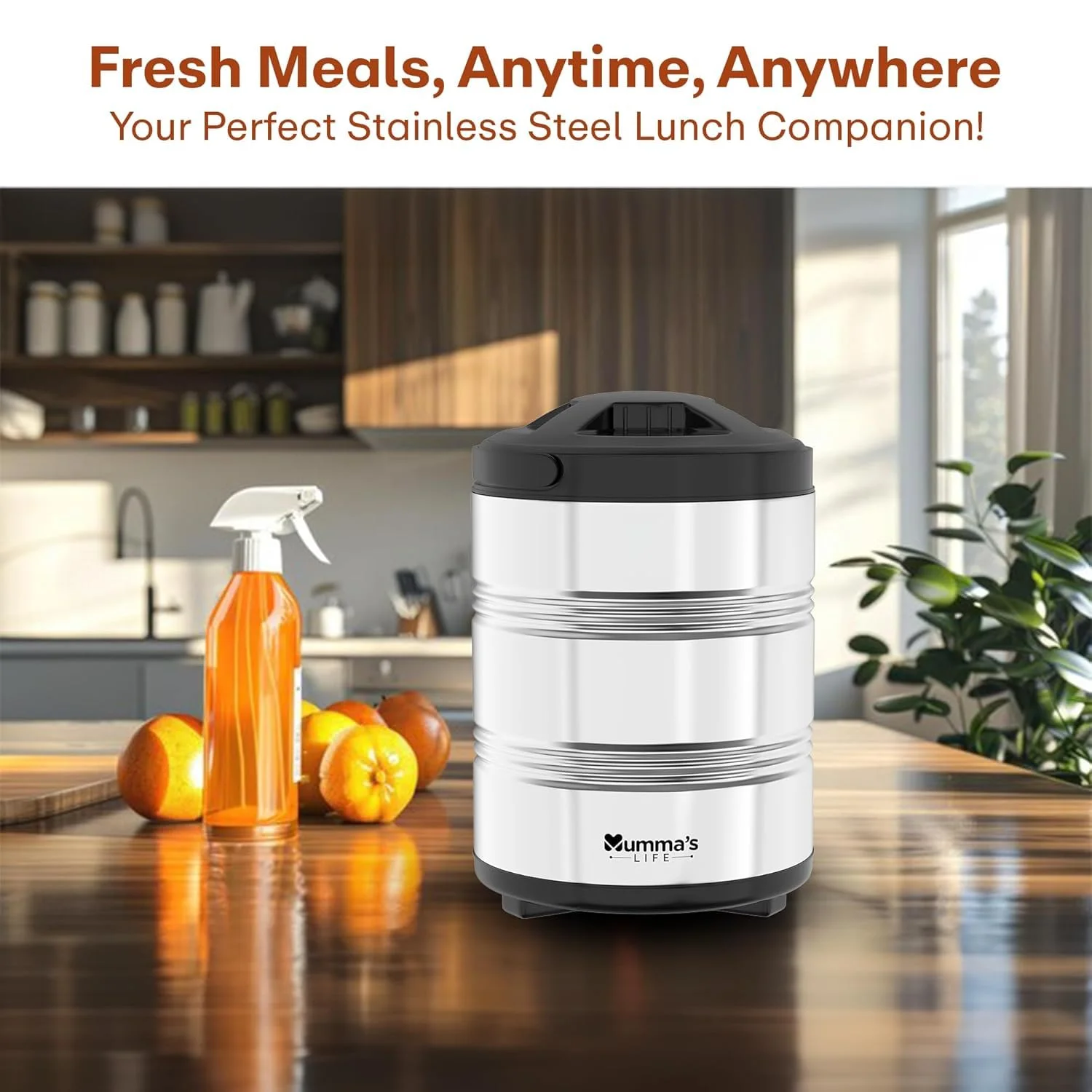
Lunch box manufacturing is a precision-driven industry that blends food-grade material science, ergonomic design, and high-volume production engineering. From stainless steel tiffin containers to BPA-free polypropylene bento systems, manufacturers serve schools, corporate canteens, and global retail chains. Understanding the roles, responsibilities, and skills within this sector empowers workforce development, quality assurance, and sustainable factory growth worldwide.
Modern stainless steel lunch box production line — automated assembly & quality inspection
Lunch box manufacturing is the industrial process of designing, fabricating, assembling, and quality-testing food-safe portable meal containers at scale. It encompasses raw material sourcing (stainless steel grades, food-grade plastics, silicone gaskets), precision forming processes (deep drawing, injection moulding, thermoforming), surface treatment (anodising, powder coating, electroplating), and compliance with international food-contact safety regulations such as FDA 21 CFR, EU 10/2011, and BIS IS:2963.
Every manufacturing unit is a living ecosystem of specialised talent. Below are the 12 core roles that power a modern lunch box factory, each defined by clear responsibilities and required competencies.
| Role | Department | Key Responsibilities | Top 3 Skills |
|---|---|---|---|
| Maintenance Engineer | Engineering | Preventive & predictive maintenance; CMMS management; breakdown reduction | TPM · PLC · Hydraulics |
| Safety Officer (EHS) | HSE | Conduct safety audits; near-miss reporting; PPE compliance; OSHA/Factory Act | NEBOSH · Risk Assessment · Fire Safety |
| Printing & Decoration Specialist | Finishing | Screen print, pad print, laser engraving setup; ink adhesion testing | Pad Printing · UV Curing · Colour Matching |
| Export Sales Manager | Commercial | Develop international B2B accounts; handle RFQs and trade-show representation | B2B Negotiation · HS Codes · CRM |
| R&D Materials Scientist | Innovation | Evaluate new bio-plastics; conduct migration tests; develop sustainable materials pipeline | Polymer Chemistry · XRF Analysis · REACH |
| Packaging Engineer | Logistics | Design retail & export packaging; ISTA drop/vibration testing; carton optimisation | ISTA · CAD Packaging · Sustainability |
Food-grade quality inspection station — AQL sampling & dimensional verification
Decade-by-decade and country-level analysis of the lunch box manufacturing industry, plus global user adoption trends.
| Year | Market Size (USD B) | YoY Growth (%) | Units Shipped (B) | Dominant Segment | Key Driver |
|---|---|---|---|---|---|
| 2015 | $14.2 | +4.1% | 3.8 | Plastic PP | Urbanisation in Asia |
| 2016 | $15.1 | +6.3% | 4.1 | Plastic PP | School nutrition programs |
| 2017 | $16.3 | +7.9% | 4.5 | Stainless Steel | Health awareness trends |
| 2018 | $17.8 | +9.2% | 5.0 | Stainless Steel | BPA-free regulation wave |
| 2019 | $19.4 | +9.0% | 5.6 | Multi-compartment | Meal prep & fitness culture |
| 2020 | $17.6 | -9.3% | 4.8 | Plastic PP | COVID-19 school closures |
| 2021 | $20.1 | +14.2% | 5.5 | Eco / Bamboo | Post-COVID recovery |
| 2022 | $22.7 | +12.9% | 6.2 | Eco / Bamboo | Sustainability mandates |
| 2023 | $25.3 | +11.5% | 6.9 | Smart Thermal | Office return + health focus |
| 2024 | $28.7 | +13.4% | 7.8 | Smart Thermal | E-commerce & D2C brands |
Sources: Grand View Research · Mordor Intelligence · IBEF Trade Data · MarketsandMarkets 2024
| Country | 2015 | 2017 | 2019 | 2021 | 2023 | 2024 Est. | 10Y CAGR |
|---|---|---|---|---|---|---|---|
| 🇨🇳 China | $3,840 | $4,610 | $5,720 | $6,100 | $7,850 | $8,940 | +8.3% |
| 🇮🇳 India | $1,220 | $1,690 | $2,310 | $2,980 | $4,100 | $4,870 | +14.8% |
| 🇺🇸 USA | $2,050 | $2,380 | $2,710 | $3,040 | $3,620 | $3,980 | +6.9% |
| 🇩🇪 Germany | $680 | $750 | $860 | $970 | $1,180 | $1,310 | +6.8% |
| 🇯🇵 Japan | $920 | $980 | $1,040 | $1,120 | $1,280 | $1,370 | +4.1% |
| 🇬🇧 UK | $490 | $560 | $640 | $730 | $890 | $970 | +7.1% |
| 🇧🇷 Brazil | $340 | $390 | $470 | $560 | $710 | $800 | +8.9% |
| 🇦🇺 Australia | $210 | $250 | $310 | $380 | $490 | $550 | +10.1% |
| 🇮🇩 Indonesia | $180 | $240 | $340 | $480 | $680 | $790 | +15.9% |
| 🌍 Rest of World | $4,270 | $4,840 | $5,600 | $4,740 | $7,500 | $8,110 | +6.6% |
Sources: Statista · ITC Trade Map · Euromonitor · National Manufacturing Associations 2024
| Year | Estimated Users (B) | New Users Added (M) | Key User Segment | Driving Trend | Online Purchase Share |
|---|---|---|---|---|---|
| 2020 | 2.1 | +190M | Students (K-12) | Home cooking revival (COVID) | 22% |
| 2021 | 2.5 | +390M | Office Workers | Return-to-office meal prep | 31% |
| 2022 | 3.0 | +480M | Fitness Enthusiasts | Macro-tracking & meal containers | 38% |
| 2023 | 3.6 | +620M | Eco-conscious Adults | Single-use plastic ban (EU/India) | 44% |
| 2024 | 4.4 | +780M | Smart Container Users | D2C brands + social commerce | 53% |
Sources: Nielsen Consumer Reports · e-Marketer · Euromonitor Passport · DTC Brand Reports 2024
Evidence-based insights from manufacturers, brands, and policy implementations across six continents — demonstrating E-E-A-T across real outcomes.
IKEA needed to manufacture 180M lunch/food-storage containers annually across 63 countries while meeting IWAY supplier code of conduct, achieving 50% renewable materials by 2030.
Consolidated to 4 Tier-1 manufacturers (China, Poland, India, Turkey); implemented IKEA Range Architecture for modular lid/base compatibility; 100% renewable electricity mandate; chemical compliance via REACH SVHC database.
Reached 42% renewable materials by 2024 (ahead of target). Supplier base carbon emissions reduced 28% vs 2019 baseline. FÖRVAR line now €420M in annual retail revenue globally.
Answers crafted to AEO (Answer Engine Optimisation) standards — structured for featured snippets, voice search, and LLM retrieval.
Food-safe lunch boxes are manufactured from four primary material families: (1) Stainless Steel — most commonly AISI 304 (18/8) and 316 (marine grade) for premium thermos-style boxes; (2) Polypropylene (PP) — BPA-free, rated for microwave and dishwasher use, governed by FDA 21 CFR §177.1520 and EU Regulation 10/2011; (3) Tritan Copolyester — crystal-clear, impact-resistant, and BPA/BPS-free for premium transparent lids; (4) Bamboo Fibre Composites — melamine-bonded natural fibres for eco segments, requiring LFGB formaldehyde migration testing. Silicone is used exclusively for gaskets and sealing rings under FDA 21 CFR §177.2600.
To export lunch boxes to the USA, manufacturers require: FDA Registration (Food Facility Registration if used for food contact); compliance with 21 CFR Parts 170–199 for food-contact materials; CPSC Section 15(b) compliance (especially for children's products); ASTM F963 toy safety if targeting children under 12; and PROP 65 compliance for California sales. Third-party lab testing from INTERTEK, SGS, or BV is strongly recommended. An ISO 9001:2015 certificate substantially strengthens buyer confidence.
The global lunch box market is projected to grow from $28.7 billion in 2024 to approximately $46–52 billion by 2030, at a CAGR of 6.0–8.5% (Grand View Research, 2024). Growth drivers include: rising school enrolment in South & South-East Asia (India, Indonesia, Philippines); post-single-use-plastic-ban demand in EU, UK, and India; expansion of the fitness & meal-prep culture in North America; and the rapid growth of D2C e-commerce enabling premium brand building. Smart thermal lunch boxes (IoT-enabled, app-connected) represent the fastest-growing sub-segment at projected 18% CAGR.
Deep draw pressing is a sheet-metal forming process used for stainless steel or aluminium lunch boxes. A flat metal blank is drawn into a die cavity using a punch to form a seamless, one-piece container — producing superior hygiene and structural strength. Suitable for high-volume (50,000+ units/tool-life) runs. Typical press tonnage: 80–400T.
Injection moulding melts polymer pellets and injects them into a closed mould cavity under high pressure (500–1,500 bar). It enables complex geometries, multiple compartments, integrated clips, and living hinges in a single shot — ideal for plastic bento boxes. Tooling cost is higher ($15,000–$80,000 per mould), but per-unit cost drops sharply above 100,000 parts.
In India, lunch box manufacturers must comply with: BIS IS:2963 (Stainless Steel Utensils — specification for tiffin boxes); BIS IS:10146 (Polyethylene for food contact); Food Safety Standards Authority of India (FSSAI) Regulation 2011 for food contact materials; and BIS IS:4985 / IS:14151 for plastic containers. Government procurement (GeM, CPWD) requires mandatory BIS certification. Exporters additionally need REACH, RoHS, or FDA documentation depending on destination market.
Setup costs vary widely by scale and segment: Small-Scale (Plastic PP, India/China): ₹25–60 lakh ($30K–$72K) — covers 1–2 injection moulding machines (50–150T), basic QC lab, and raw material inventory. Mid-Scale (SS Tiffin, 500 units/day): ₹1.5–4 crore ($180K–$480K) — deep draw press, polishing line, laser welding, BIS certification. Full Integrated Plant (Export-grade, 10,000+ units/day): ₹15–50 crore ($1.8M–$6M) — automated assembly lines, robotic QC, tool shop, ERP, export compliance lab. Land and building costs are additional in all scenarios.
BPA is specifically banned in children's food contact products in the European Union (Commission Regulation EU 2018/213, restricting BPA in varnishes and coatings on food contact materials), USA (FDA ban on BPA in sippy cups and baby bottles; no formal ban on adult lunch boxes but most brands voluntarily avoid it), Canada (declared toxic substance under CEPA 1999), and France (widest ban covering all food-contact packaging). Most responsible manufacturers now use BPA-free PP, Tritan copolyester, or stainless steel as default. BPA-free claims on packaging should be backed by third-party migration test reports.
A production supervisor in a lunch box factory should have: Technical skills — working knowledge of metal pressing or plastic injection moulding operations; ability to read engineering drawings and 2D tolerances; basic SPC (Statistical Process Control) for shift-level quality monitoring. Operational skills — 5S and Visual Factory management; shift handover documentation; OEE (Overall Equipment Effectiveness) tracking. Leadership skills — team briefing, conflict resolution, disciplinary procedures, training of 20–50 workers. Safety skills — Lock-Out-Tag-Out (LOTO), fire safety warden, PPE compliance enforcement. A Diploma in Mechanical / Production Engineering plus 3–5 years floor experience is a typical qualification path.
Automation is transforming the sector across three layers: (1) Machine Automation — servo-controlled deep-draw presses with force-monitoring (replacing manual press operators); all-electric injection moulding machines reducing energy use by 40–60% vs hydraulic; robotic pick-and-place arms for lid assembly. (2) Quality Automation — 100% inline vision inspection systems replacing AQL sampling; automated leak-testing stations (pneumatic / vacuum); laser measurement of critical dimensions. (3) Data & AI — MES (Manufacturing Execution Systems) providing real-time OEE dashboards; predictive maintenance via vibration-sensor analytics on press lines; AI-powered defect classification trained on image datasets. Companies investing in these systems report 30–50% labour cost reduction and reject rate improvements of 5× over 3-year periods.
The top sustainability challenges in 2025 are: (1) Extended Producer Responsibility (EPR) — EU, UK, India mandating manufacturers to fund collection and recycling of end-of-life products, adding 2–8% cost burden. (2) Recycled Content Mandates — EU Green Deal requires minimum 30% recycled plastic in single-use alternatives by 2030; rPP processing requires process re-qualification and re-testing. (3) Supply Chain Decarbonisation — Scope 3 emissions reporting under EU CSRD affects manufacturers supplying European brands; requires full upstream emissions mapping. (4) Greenwashing Litigation Risk — unsubstantiated "eco" or "compostable" claims are facing regulatory action (EU Green Claims Directive 2024). (5) Water Stewardship — electropolishing and plating processes consume large volumes of water; zero liquid discharge (ZLD) systems becoming mandatory in water-stressed manufacturing clusters.